A Giant Galaxy That Shouldn’t Exist So Early
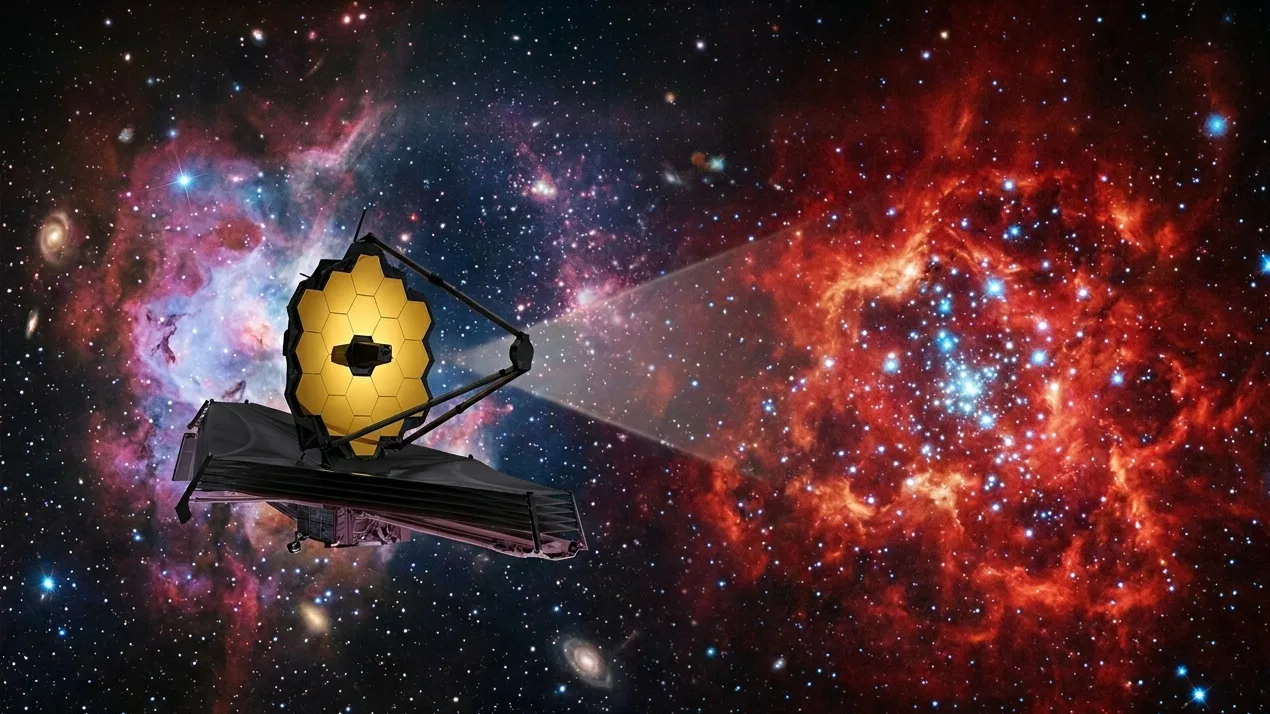
James Webb TelescopeNormally, galaxies in the young universe are expected to appear bright blue because they contain hot, newly formed stars. But EGS-z11-R0 is different. It is packed with cosmic dust that absorbs blue light and gives the galaxy a reddish glow.That amount of dust is usually seen in much older galaxies — not in one that existed so soon after the birth of the universe.Researchers say the discovery is similar to finding a fully grown redwood tree in a freshly planted field. In cosmic terms, the galaxy appears far more mature than scientists believed possible for that era.“This happened so fast and so early,” said astrophysicist , who was not involved in the study.
James Webb Telescope Continues To Rewrite Cosmic History
The discovery was made by a team led by from the University of Padua in Italy. The researchers analyzed public data collected by the James Webb Space Telescope while searching for hidden galaxies buried beneath thick layers of dust.The telescope detected signs of carbon and ultraviolet light patterns that suggest the galaxy had already gone through multiple generations of star formation — something astronomers did not expect to see this early in cosmic history.Scientists believe stars need time to create heavy elements like carbon and the dust seen in galaxies. That means galaxies may have started forming even earlier than previously estimated — perhaps only 200 million years after the Big Bang.
What Makes ‘Red Monster’ Galaxies Special?
Astronomers have already identified several so-called “blue monster” galaxies in the early universe. Those galaxies are massive but lack the thick dust clouds that make red monsters appear crimson.
Researchers now suspect the two types of galaxies could be connected. One possibility is that dusty red galaxies slowly evolve into clearer blue galaxies as cosmic dust spreads out over time.
If confirmed, the discovery would help scientists better understand how galaxies grow, evolve, and shape the universe we see today.
A New Era Of Space Discoveries
Since its launch, the James Webb Space Telescope has repeatedly stunned astronomers by detecting galaxies far earlier and larger than expected. The observatory can peer billions of years into the past, allowing scientists to study the universe shortly after its creation.The discovery of EGS-z11-R0 adds another mystery to the growing list of unexpected findings from Webb and suggests the early universe may have been far more complex than scientists once imagined.Researchers plan to continue studying the galaxy using additional infrared observations to confirm whether dust is truly responsible for its unusual red appearance.