When President Donald Trump ordered direct U.S. military strikes against Iranian targets in early 2026, the official explanation was straightforward: neutralize Iran’s nuclear program, destroy its ballistic missile capabilities, and protect American allies — especially Israel — from imminent threats.
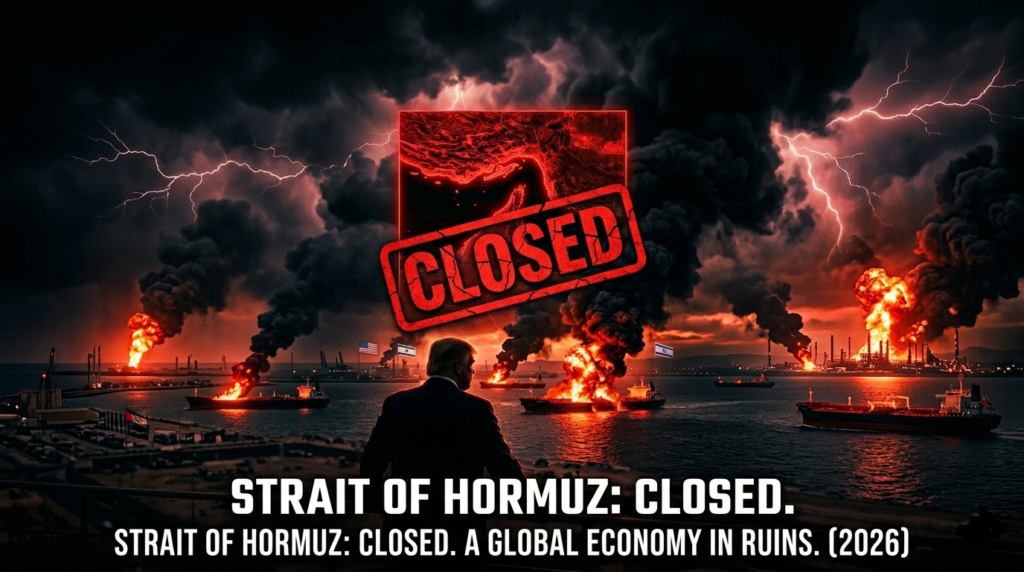
But as the conflict escalated and the Strait of Hormuz became a global flashpoint, many analysts, journalists, and geopolitical experts began asking a deeper question: Was this really just about stopping a nuclear Iran, or were there larger, less-publicized motives at play?
The 2026 Iran war has become one of the most debated conflicts of the decade. While security concerns are undeniably real, a closer look at the timing, alliances, energy politics, and Trump’s own history reveals a more complex picture — one that includes strategic dominance, personal legacy, strong Israeli influence, and long-term control over critical oil reserves and supply routes.
Table of Contents
The Official Story: Security First
From the beginning, the Trump administration framed the operation as defensive and necessary. Key points included:
- Iran was reportedly close to crossing the nuclear threshold or had already enriched uranium to weapons-grade levels.
- Iranian-backed militias had increased attacks on U.S. forces and Israeli targets in the region.
- Intelligence suggested plans for major strikes against American bases and Israeli cities.
Trump repeatedly stated that “we had no choice” and that the strikes were “precise and limited” to prevent a much larger war. Israeli Prime Minister Benjamin Netanyahu strongly supported the U.S. action, calling it essential for the survival of the Jewish state.
On the surface, this narrative makes sense. Iran’s nuclear program has been a major concern for decades, and its support for proxy groups has destabilized the Middle East for years.
But Questions Remain
Despite the official line, several inconsistencies have fueled skepticism:
- Diplomatic talks between the U.S. and Iran were reportedly making slow but steady progress before the strikes intensified.
- Some U.S. intelligence assessments reportedly did not show clear evidence of an “imminent” large-scale Iranian attack.
- The scale of the U.S. military involvement went far beyond surgical strikes on nuclear sites, targeting broader military infrastructure.
These gaps have led many observers to look for deeper motives behind the decision to escalate.
Motive 1: Strengthening the U.S.-Israel Alliance
One of the most obvious factors is Trump’s long-standing and unusually close relationship with Israel. During his first term, he moved the U.S. embassy to Jerusalem, recognized Israeli sovereignty over the Golan Heights, and brokered the Abraham Accords.
In 2026, Israeli leadership — particularly Netanyahu — is believed to have played a significant behind-the-scenes role in pushing for American military action. For Israel, weakening Iran permanently would remove its biggest regional rival and significantly reduce the threat from Hezbollah and other proxies.
By backing Israel so decisively, Trump not only strengthened a key alliance but also solidified support among his pro-Israel voter base in the United States.
Motive 2: Personal Legacy and the “Strongman” Image
Donald Trump has always portrayed himself as a decisive leader who gets results where others fail. From the Soleimani strike in 2020 to his trade wars and maximum pressure campaign on Iran during his first term, bold action has been central to his brand.
A successful campaign against Iran — one that visibly weakens its military capabilities and forces it into a weaker negotiating position — would be presented as a major foreign policy victory. It would reinforce the narrative that only Trump has the courage and strength to deal with “rogue regimes.”
Critics argue that this personal and political dimension played a bigger role than publicly admitted.
Motive 3: Long-term Control Over Energy Resources
Perhaps the most controversial theory — and one gaining traction among independent analysts — is that the conflict is also about securing greater influence over oil reserves and critical energy routes.
After Venezuela, where the United States has long sought to control or significantly influence one of the world’s largest oil reserves, some observers see a similar pattern emerging in the Middle East.
The Strait of Hormuz, through which nearly 20% of the world’s oil supply passes daily, became a central battleground. Iran’s ability to threaten or restrict traffic through this chokepoint gives it enormous leverage. By weakening Iran’s military and naval capabilities, the U.S. and its allies could gain much greater strategic control over global energy flows.
Critics point out that controlling energy resources has historically been a major driver of U.S. foreign policy in the region. If successful, the 2026 campaign could position America (and its allies) with significantly more influence over Middle Eastern oil than before — following the pattern seen earlier with Venezuela.
Whether this was a primary goal or a beneficial side effect remains hotly debated, but the connection between military action and energy geopolitics is hard to ignore.
Motive 4: Ideological Opposition to the Iranian Regime
Trump and many in his circle have long viewed the Islamic Republic of Iran as a fundamentally hostile regime that sponsors terrorism and threatens regional stability. This ideological stance goes beyond security concerns — it is about opposing a government that Trump has repeatedly called “the world’s leading sponsor of terrorism.”
The 2026 strikes, combined with public calls for Iranians to “take their country back,” suggest an underlying desire not just to contain Iran, but to weaken or even facilitate the fall of its current theocratic system.
The Human and Economic Cost
While motives are debated, the human cost has been devastating. Civilian casualties, displacement, and economic hardship have affected millions in the region. Global oil prices spiked dramatically when the Strait of Hormuz was disrupted, affecting everything from fuel costs to inflation worldwide.
The long-term consequences — whether this leads to a more stable Middle East or a prolonged cycle of conflict — remain uncertain.
Conclusion: A Complex Mix of Motives
The real motive behind Trump’s involvement in the 2026 Iran-Israel war is likely not one single factor, but a combination of several:
- Genuine security threats from Iran’s nuclear and missile programs
- Strong strategic and political alignment with Israel
- Trump’s desire to project strength and build a decisive legacy
- Long-term geopolitical interests, including greater influence over energy resources and supply routes in the Middle East
Understanding these layered motives is crucial for anyone trying to make sense of the conflict. While the official narrative focuses on immediate security, the broader context suggests much larger strategic, political, and economic calculations were at play.
What do you think? Was this war primarily about stopping a nuclear threat, supporting Israel, securing energy routes, or something else entirely? Share your thoughts in the comments below.