How many satellites are in space?
The Sky Above You Is Already Crowded — You Just Can’t See It
A look at Earth’s hidden traffic problem, 400 km above our heads
Go outside on a clear night. Look up. It feels timeless — the same slow scatter of stars people have stared at for thousands of years. Sailors crossed oceans by them. Farmers timed their harvests by them.
But what you’re actually looking at is a lie. A beautiful, outdated one.
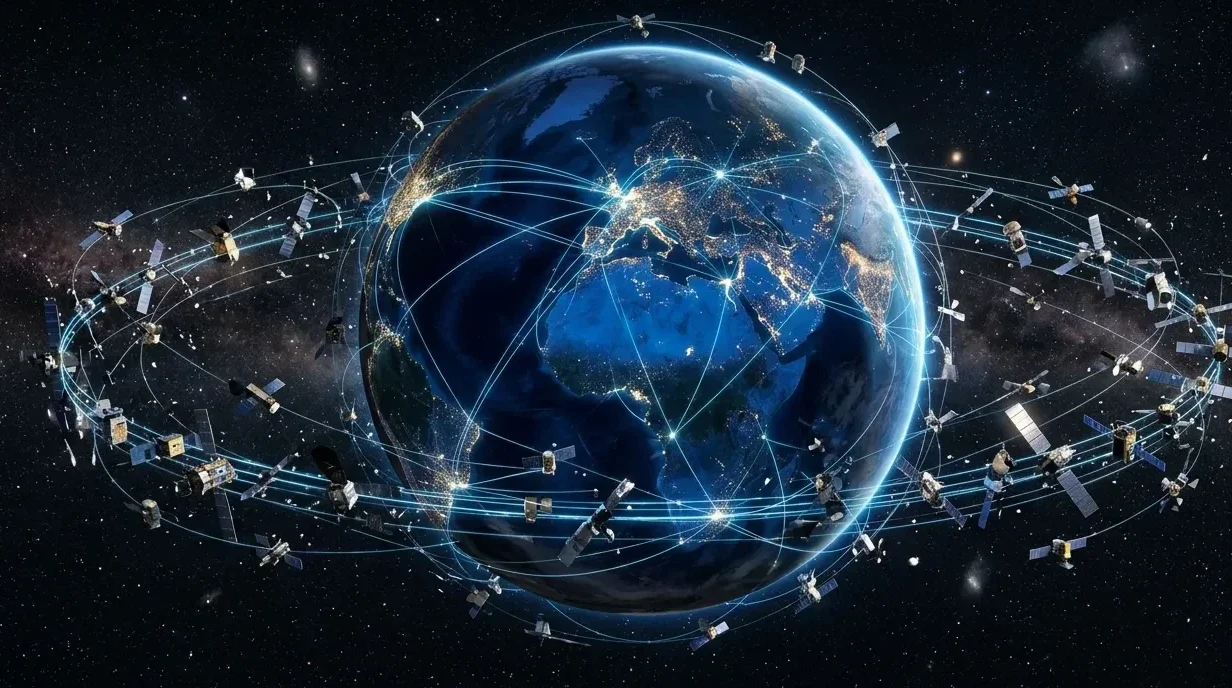
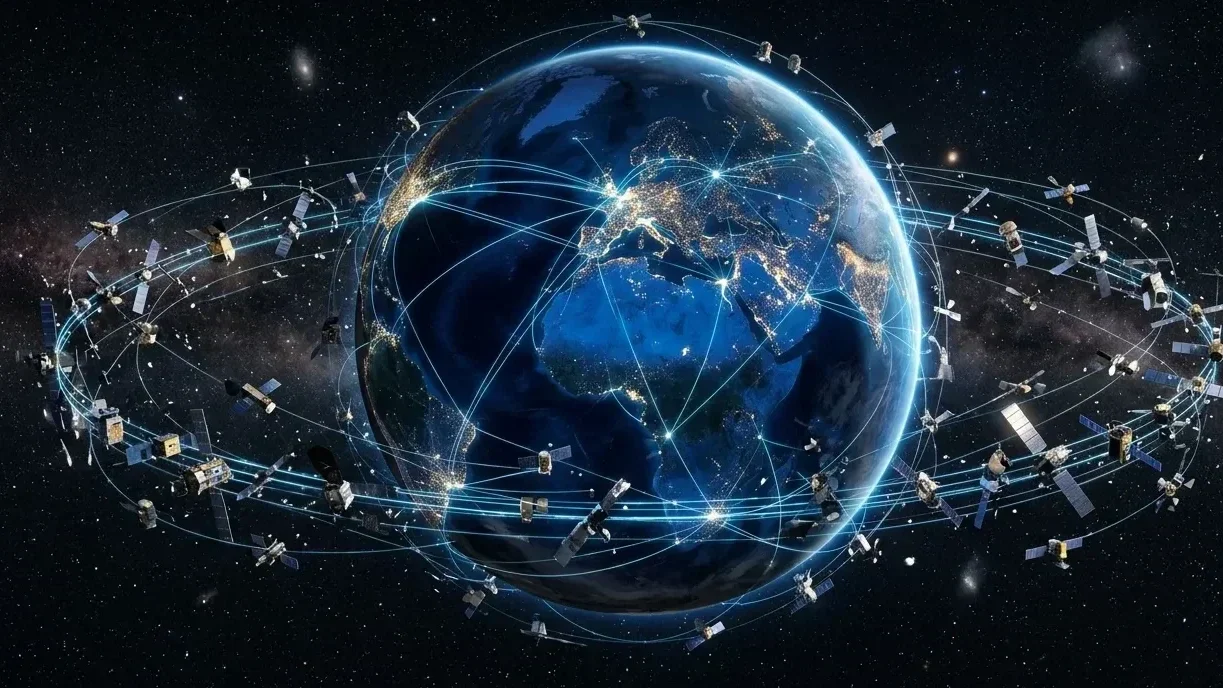
Right now, wrapped around Earth like an invisible second atmosphere, thousands of machines are orbiting at 28,000 kilometers per hour — carrying your GPS directions, streaming your Netflix, delivering weather warnings, routing bank payments, guiding cargo ships, and tracking wildfires before firefighters even know where to look.
As of 2026, roughly 14,000 to 15,000 active satellites circle Earth. And that’s just the working ones. Once you add in dead spacecraft, old rocket stages, and fragments from past collisions, low Earth orbit starts looking less like “the final frontier” and more like a parking garage that nobody manages.
Real-life example: When Hurricane Ian hit Florida in 2022, emergency responders relied on satellite imagery to assess flood damage in areas where roads were completely destroyed. Ground teams couldn’t reach those zones for days — but satellites could see everything within hours.
How did we get here so fast? How Many Satellites Are in Space
In 2019, there were around 2,000 active satellites up there. Six years later, we’re past 14,000. That’s not steady growth — that’s a population explosion.
Must Read : Early Universe Galaxies Reveal a Groundbreaking Secret About Cosmic Evolution
For decades, satellites were a government thing. NASA, ESA, ISRO — agencies with massive budgets and careful mission timelines would spend years designing, testing, and launching one spacecraft at a time. Weather satellite. Navigation constellation. Military recon bird. Slow, deliberate, expensive.
Then private companies changed the math completely. Instead of launching one satellite, why not launch thousands? Instead of a spacecraft, why not a swarm?
SpaceX took that question seriously. Their Starlink network now has over 10,000 satellites deployed as of May 2026 — more than the entire world had combined just a decade ago. One company. Ten thousand spacecraft. That shift in scale is genuinely hard to process.
Real-life example: When Russia cut internet cables in Ukraine in 2022, Starlink terminals were airlifted in within days. Hospitals, military units, and local governments that had gone dark were back online. A system that didn’t exist five years ago became critical wartime infrastructure almost overnight.
What are they all actually doing up there?
Most people picture satellites as distant, mysterious — the kind of thing NASA scientists monitor on big screens in Houston. The reality is far more mundane and far more essential.
Satellites are basically the internet’s plumbing. They’re the reason your phone knows where you are, why weather apps can tell you it’ll rain on Thursday afternoon specifically, why ships crossing the Pacific don’t get lost, and why ATMs in remote towns can still process your card.
Real-life example: The 2016 GPS glitch that affected police radios across the US — triggered by a single software update to one satellite — knocked out timing systems that synchronized communications across 12 states. Nobody called it a crisis. It was fixed quietly. But it showed exactly how invisible this infrastructure is until it hiccups.
Think about the last time you opened Google Maps while driving somewhere unfamiliar, or checked a flight radar app, or got an amber alert on your phone. All satellites. None of it feels technological in any dramatic sense — it just works, silently, overhead.
The part nobody talks about: the junk
Here’s where things get genuinely worrying.
Not everything in orbit is functional. Thousands of dead satellites drift through space with no one steering them. Collisions and old rocket explosions have shattered spacecraft into clouds of fast-moving debris. Scientists currently track more than 44,000 large objects orbiting Earth — and millions of smaller fragments they can’t track at all.
At orbital speeds, a bolt the size of your thumb hits with the energy of a small bomb. Size is completely irrelevant. Velocity is everything.
Real-life example: In 2009, a working Iridium communications satellite collided with a dead Russian military satellite over Siberia. Nobody saw it coming. The crash created over 2,000 trackable fragments — and an unknown number of smaller ones. Some of that debris is still circling Earth today and will be for decades.
Scientists call the worst-case version of this Kessler Syndrome. The chain reaction scenario: one collision creates debris, that debris causes more collisions, those create more debris, until eventually certain orbital altitudes become too dangerous to use. Not science fiction — a real concern that agencies like NASA and ESA model and plan around.
Astronomers are quietly furious
There’s another problem that doesn’t make headlines but bothers researchers deeply: satellite streaks are ruining ground-based astronomy.
Long-exposure telescope images — the kind used to detect asteroids, study distant galaxies, map the cosmos — now regularly get slashed by bright lines where a Starlink satellite passed through the frame. Some research teams are throwing out significant chunks of their data because of it.
Real-life example: The Vera Rubin Observatory in Chile, one of the most powerful sky survey telescopes ever built, was designed to capture thousands of images per night. Astronomers estimate that satellite trails could affect 30–40% of its images during twilight hours — exactly when it’s most useful for tracking near-Earth asteroids. The people building it had to design mitigation software before the telescope even opened.
There’s also a quieter, harder-to-quantify loss. For most of human history, the night sky belonged to everyone — it was a shared cultural inheritance. Polynesian navigators, ancient Egyptian priests, Galileo with his first telescope, a kid lying on a trampoline in a backyard somewhere in rural Idaho. All looking at basically the same thing.
That’s starting to change in a way that can’t easily be undone.
This is geopolitics now, not just technology
The US currently controls orbit by an enormous margin, almost entirely because of commercial operators like SpaceX. China is building its own mega-constellation — Guowang — specifically to compete. Europe, India, and a growing number of private aerospace startups are all pushing harder.
Orbit has become real estate. Whoever controls it controls communications, surveillance, navigation, and increasingly, the logistics of the global economy. The space race of the 1960s was about national pride and ideology. This one is about market share and military advantage simultaneously.
Real-life example: In 2022, the US government paid SpaceX hundreds of millions to keep Starlink running for Ukraine — a commercial satellite network functioning as a geopolitical instrument. Five years ago, that sentence wouldn’t have made sense. Today it’s just a procurement contract.
A planet wearing a digital halo
Step back and think about the timeline for a second. Homo sapiens have been around for roughly 300,000 years. We spent almost all of that time confined entirely to the surface of one planet, navigating by stars, sending messages on horseback, unable to see our own continents from above.
Then, within about 65 years of the first satellite launch, we surrounded our entire planet with over 14,000 intelligent machines, talking to each other constantly across the vacuum of space.
That happened absurdly fast. And it’s still accelerating — some projections suggest tens of thousands more satellites could reach orbit within the next decade.
So the next time someone asks how many satellites are orbiting Earth, the honest answer is: more than yesterday, fewer than tomorrow. The sky you see when you look up isn’t empty. It hums with data — invisible conversations wrapping the planet at speeds too fast to imagine, carrying information that shapes almost everything about modern life.
We built it in one human lifetime. Nobody really planned it that way. And right now, nobody’s quite sure where it goes from here.